
Research
BIKEBAZE dives deeper: bicycle safety around public transport hubs
Why are public transport hubs at extra risk of theft?
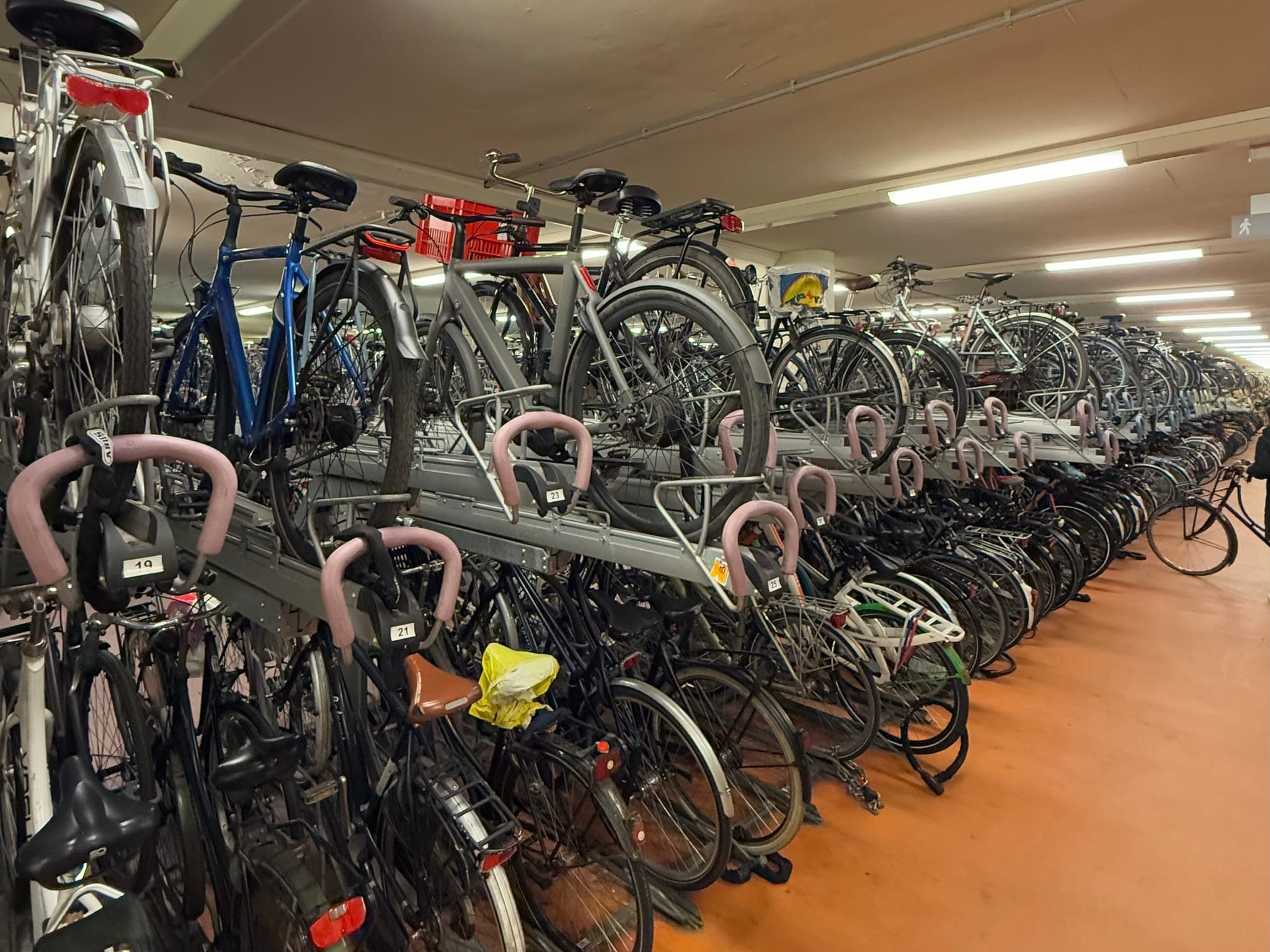
Why stations and public transport hubs require extra attention, where confusion around bicycle depots arises, and what cyclists and operators can do.
In our first insight, we discussed a hidden problem: bicycle thefts from secured bike parking facilities. In this article, we dive deeper into bicycle thefts at public transport hubs, where we receive a huge number of reports. At first glance they seem comparable to secured bike parking facilities, but in reality they have completely different causes and solutions.
The Netherlands is a country of multimodal travel. For millions of people, a journey begins and ends by bicycle: cycling to the station, parking the bike, continuing by train, metro or tram. It is efficient, sustainable, and deeply embedded in Dutch mobility culture.
At the same time, BIKEBAZE sees a clear and recurring pattern in its data. A significant share of reported bicycle thefts occurs at or near public transport locations. This is true not only for major national rail hubs, but also for smaller local stations, metro stops and supervised bicycle parking facilities.
In this article, we share what our data reveals, why stations are more vulnerable than often assumed, and how practical measures can strengthen trust in the combination of cycling and public transport.
If you are a facility manager, researcher or practitioner with insights that can enrich this picture, we warmly invite you to share them with us.
Bicycle theft around stations: what the data shows
When people report a stolen bicycle, one location appears again and again:
“It was parked at the station.”
Quotes below may be translated or lightly edited for clarity. Specific place names have been removed.
Commonly reported situations include:
- Open bicycle parking at railway stations
“My bike was locked in the bicycle parking area at the station.” - Overnight or early-morning parking
“I parked my bike at 17:15 after work. The next morning at 6:30 it was gone.” - Supervised or guarded parking facilities
“Supervised bicycle parking at Utrecht Overvecht station. Bike missing.”
“Guarded bicycle parking at Bilthoven station, yet still stolen.” - Large urban transport hubs
“Bicycle parking near The Hague Central Station. Parked at 15:30, gone by 22:00.”
These are not isolated incidents. The pattern appears nationwide and makes public transport hubs one of the most frequently mentioned locations in bicycle theft reports.
Why are stations more vulnerable?
1. Many bicycles, limited individual oversight
Busy environments feel safe, but they also make individual actions less noticeable. Someone handling a bicycle or a lock blends in easily.
2. Time pressure for travellers
Many cyclists are in a hurry to catch a train or connection. Parking choices are often made quickly, and extra security measures may be skipped.
3. Anonymity is the norm
In residential buildings, unfamiliar behaviour stands out. At stations, nearly every bicycle belongs to someone unknown.
4. Quiet night-time hours
A substantial share of incidents occurs between 22:00 and 06:00, when bicycle parking areas are largely empty.
5. Supervised does not mean risk-free
Guarded facilities offer clear added value. At the same time, large-scale operations depend on layout, staffing and procedures, which can vary by moment and location.
6. Easy targets in one place
Many (expensive) bicycles are poorly locked here, because it’s difficult to secure your bike with a double lock.
Stolen or removed? A common source of confusion
Around public transport hubs, parking regulations are often stricter than elsewhere in the city. These may include prohibited zones, maximum parking durations, facilities that close overnight, or intensified enforcement.
As a result, cyclists sometimes believe their bicycle has been stolen, while it has actually been:
- removed by municipal enforcement
- transferred to a local bicycle depot
- temporarily relocated due to construction or obstruction
From the cyclist’s perspective, the experience is the same: the bicycle is gone. Technically, however, this is not theft. The challenge is that many travellers are unfamiliar with local depot systems or where to check first.
Clear information and quick verification can prevent unnecessary frustration in these cases.
What cyclists and operators can do
BIKEBAZE aims to be practical rather than prescriptive. Based on reported incidents, small and realistic measures can make a real difference.
For cyclists at stations
- Use a high-quality, certified lock and secure the frame to a fixed object
- Prefer supervised bicycle parking facilities where available (but don’t feel too safe, still use a double lock, because “guarded” can create a false sense of security)
- Remove your e-bike battery
- Avoid dark or secluded corners of large parking areas
- Be aware of maximum parking durations where these apply
- If your bike appears to be stolen, first check whether it has been moved or taken to a depot
- Register your bicycle in your name for added traceability in case of theft, and mark your bicycle registration for added prevention.
Voor VvE’s, beheerders en bedrijven:
- Ensure clear and highly visible signage about parking rules and maximum durations
- Communicate clearly where bicycles are taken when they are removed, via signs, websites or information points
- Design parking areas to maximise visibility and natural social surveillance
- Regularly review lighting, layout and camera coverage, and adjust where needed
- Make active monitoring clear and place your cameras in visible locations
- Coordinate closely between enforcement, facility management and information desks
- Use real security, with guards visibly walking around
- Ensure faster follow-up and guidance when reports come in, involving necessary parties or direction people to the right organisations, such as the policy, the bicycle depot, or BIKEBAZE.
- Hotspot management: extra supervision during peak times
- Make access smarter: only allow exits with your own bicycle, or with proof of ownership
- Add more anchor points so people can easily lock their bike by the frame instead of just a wheel
- Maintain order: remove abandoned bikes more quickly, fix broken lighting promptly
- Communicate more about proper lock usage and securing bikes, and about the false sense of security people may have.
Small interventions can significantly raise the threshold for theft.
What BIKEBAZE sees and why we share this
BIKEBAZE analyses thousands of bicycle theft reports each year. By aggregating this data, patterns emerge that often remain invisible at the level of individual locations.
By sharing these insights with travellers, municipalities and organisations such as the Dutch Cycling Embassy, we aim to contribute to better-designed infrastructure, improved facility management, greater awareness without fear, and ultimately fewer stolen bicycles.
Working together towards a strong bicycle–public transport system
The combination of cycling and public transport is one of the greatest strengths of the Dutch mobility system. Bicycle theft is a real challenge, but it is not inevitable.
With realistic measures, better information and smart collaboration, stations can be places where cyclists confidently leave their bicycles allowing travel to remain smooth, sustainable and worry-free.
If you are a manager, researcher or expert with additional insights that could support further analysis, we invite you to share them with us.
Take part in our research
Want to contribute to our ongoing research into bicycle theft and prevention? Fill in the form. We will loop you in on upcoming studies and share our findings with you.