
Research
BIKEBAZE dives deeper: why so many bikes are being stolen from 'secure' parking facilities
Why is so much being stolen from secure bicycle parking facilities?
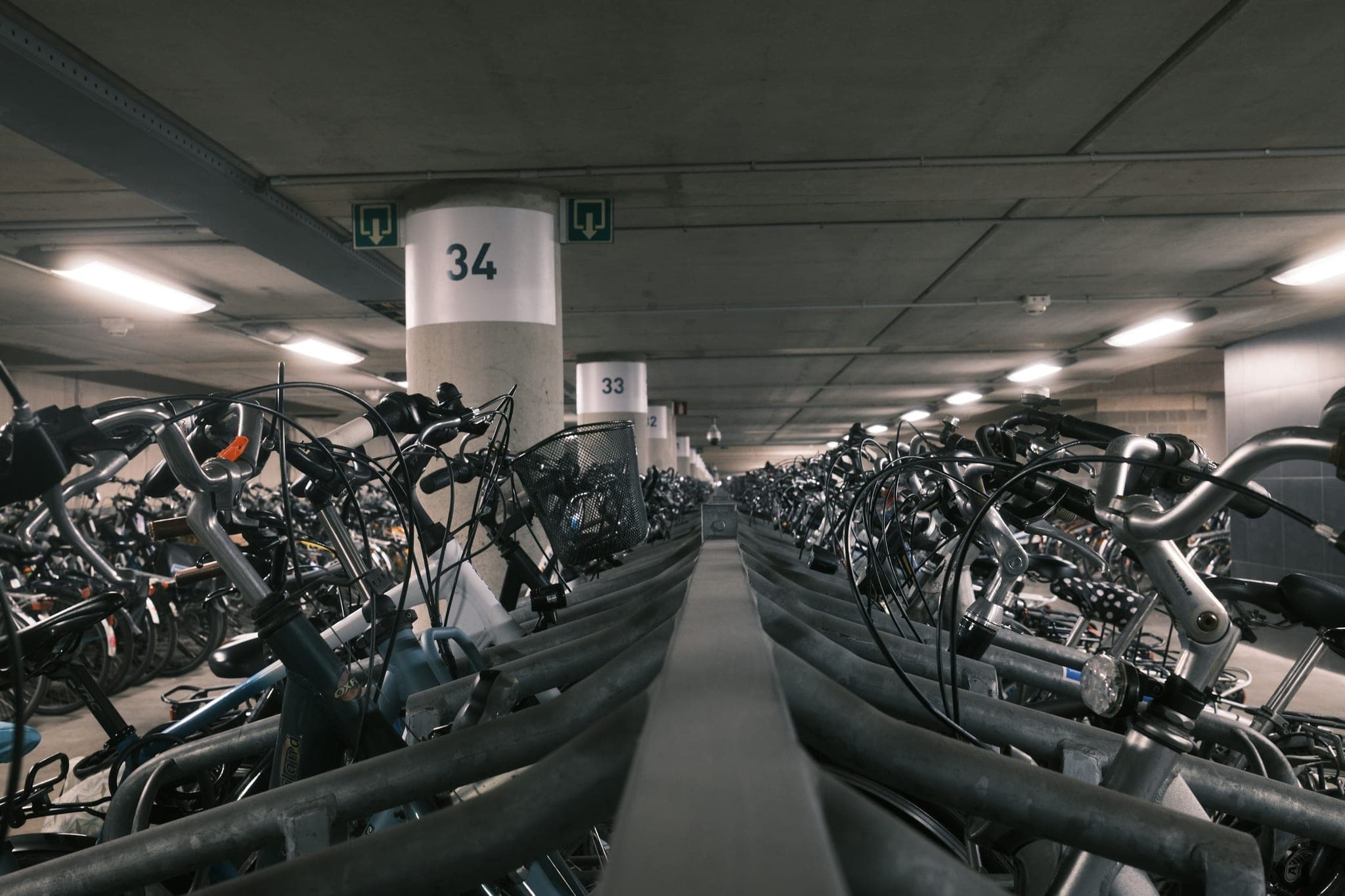
A hidden problem with a major impact on cyclists and what we can do about it
The Netherlands is a cycling nation. When people do not want to leave their bike outside, they store it in a locked bike room, behind a badge system, in an underground garage or in a secured bicycle storage area. These are places where a bike is supposed to be safe.
Reality shows something different. BIKEBAZE monitors and analyses bicycle theft reports across the Netherlands, and we see a remarkable and rarely discussed pattern. A large share of thefts happens in places that people consider safe. Not on a busy street or an open square, but inside closed, controlled and often professionally designed facilities.
This article explores that pattern, shares examples from our database and explains why secure locations can still be vulnerable.
Bicycle theft behind closed doors: what we see in the data
When people report a stolen bicycle, we often hear the same sentence: “It was in a locked room. I thought it would be safe there.” Yet the reports we receive at BIKEBAZE tell a different story. Below are several recurring situations.
Quotations may be translated and lightly edited for clarity. Place names and specific locations mentioned in the original reports have been omitted.
From BIKEBAZE reports, these are common situations:
- Apartment storage areas
“My bicycle was stored in my building’s indoor garage with a frame lock, but it was gone the next morning.” - Storage rooms with cameras that turn out not to work
- “My bike was parked in a secured storage room. Cameras were visible at every entrance, but later turned out to be inactive. The cut chain was still on the floor.”
- Underground parking garages with tag access
“The storage areas on the lower levels require an access tag. I locked my bike with a chain and removed the battery, yet it still disappeared overnight.” - Workplaces and educational institutions
“My bicycle was stolen from the locked bicycle room on campus.” - Urban parking garages
“Parked in an underground garage with controlled entry, but the bike still vanished.”
These are not isolated incidents. This pattern appears throughout the entire country.
Why are secure locations attractive to thieves?
1. Shared access makes misuse easy
Many apartment complexes, offices and schools use a central badge or tag system. Offenders can follow someone inside, slip through a door that is still open or gain access through a lost or copied pass.
2. Lack of social oversight
In a public bicycle parking area a passerby can immediately notice suspicious behaviour. In a closed garage or basement there is often no one around. It is quiet, dark and isolated. Ideal conditions for someone who wants time and privacy to remove a lock.
3. Cameras that appear to work but often do not
We frequently see reports where cameras are visible but not recording. Sometimes they are broken. Sometimes footage is not stored. Sometimes no one reviews it. This creates a false sense of security that thieves understand and exploit.
4. Residents trust the facility and use lighter locks
Because the environment feels safe, many residents use only a ring lock or a thin chain. For an experienced thief this offers little resistance. Light security combined with a quiet indoor environment works in their favour.
The impact on cyclists: more than financial loss
Losing a bike affects more than a wallet. In BIKEBAZE reports people regularly describe consequences such as:
- Mobility problems for work or school
- Stress or feeling unsafe in their own building
- Extra costs for insurance or replacement
- Longer travel times and reduced flexibility
It is not only about the bike itself. It affects people’s daily independence.
What cyclists and facility managers can do?
We aim for realistic prevention, not fear. These measures make a meaningful difference in practice.
For cyclists:
- Use at least one ART certified lock, preferably a hardened chain of twelve millimetres or more.
- Always secure your bike to an immovable object, even in a closed facility.
- Remove the e-bike battery when parking your bicycle. This reduces the value of the bike and lowers the risk of theft. (Addition via Jorg Wellink, ChargeHyve)
- Choose a visible spot that is not too remote, such as avoiding the darkest corner of a basement level.
- Check whether cameras are actually active by looking for indicators or asking your building association.
- Register your bike and attach a visible SafeTag through BIKEBAZE as additional deterrence.
For building associations, managers and companies
- Check monthly whether cameras function properly and footage is stored.
- Ensure doors close quickly and cannot be held open.
- Install motion activated lighting to avoid dark corners.
- Number bicycle spaces to support monitoring.
- Make it easy for residents or employees to report suspicious situations.
- Consider group registration so all residents or colleagues can register their bicycles at once.
Small interventions significantly increase the threshold for offenders.
What BIKEBAZE sees, and why we share it
As an organisation mapping bicycle theft across the Netherlands, we analyse thousands of reports every year. We identify trends that often remain unnoticed, such as the surprisingly high number of thefts inside closed facilities.
Our goal is not to cause fear but to encourage understanding and better solutions. With more insight we can work together to ensure that cycling remains safe and carefree.
Working together toward a safer cycling culture
Cycling keeps cities accessible, healthy and liveable. Bicycle theft is a serious challenge, but not an unavoidable one. With better information, stronger infrastructure and improved cooperation, indoor parking facilities can once again become what they are meant to be. Places where your bike is truly safe.
If you are a facility manager, researcher or expert with insights that can contribute to our ongoing work, we would be glad to hear from you. You can share your input here.
Take part in our research
Want to contribute to our ongoing research into bicycle theft and prevention? Fill in the form. We will loop you in on upcoming studies and share our findings with you.