Tips
AirTag on Your Bike: Worth It or Not?
TL;DR: An Apple AirTag (around 30 to 35 euro, year-long battery) can help locate a stolen bike in busy cities via the Find My network, but it has no real-time GPS, no theft alarm, and warns iPhone-owning thieves. Combine it with a BIKEBAZE registration and SafeTag for layered protection.
··Last updated:
Since its introduction, the Apple AirTag has become a popular gadget for tracking valuable items, including bicycles. But is an AirTag truly useful for bike security, or does it remain a nice idea without practical value? In this article, we outline the main pros and cons, so you can make an informed decision about using an AirTag on your bike.
1. How Does an AirTag Actually Work?
An AirTag uses Bluetooth technology and Apple's global 'Find My' network. The tracker sends out a Bluetooth signal that is picked up by passersby with an iPhone, iPad, or Mac. These devices then relay the location anonymously and encrypted to your 'Find My' app. As a result, you see on a map where your bike was last detected.
Important: An AirTag is not a GPS tracker. It doesn't show real-time location, but only displays the last known location when an Apple device passed the tag. In busy cities, this works excellently, but in rural or remote areas, it may take hours before you receive an update.
2. Advantages of an AirTag on Your Bike
Affordable and Subscription-Free
With a purchase price of approximately €30-€35, the AirTag is much cheaper than most specialized GPS trackers, which often come with monthly subscription costs. The AirTag works without additional costs, only a replaceable coin cell battery (CR2032) is needed after about a year.
Long Battery Life
The battery lasts an average of one year, which is considerably longer than GPS trackers (often only a few weeks to a month). This makes the AirTag particularly low-maintenance.
Worldwide Network in Urban Areas
In densely populated cities, there's a high chance that passersby with iPhones will regularly detect your AirTag. This makes the tracker particularly effective in places like Amsterdam, Rotterdam, or Utrecht, where bike theft is a major problem. User experiences show that stolen bikes are sometimes recovered within a few hours thanks to the AirTag.
Discreet and Inconspicuous Mounting
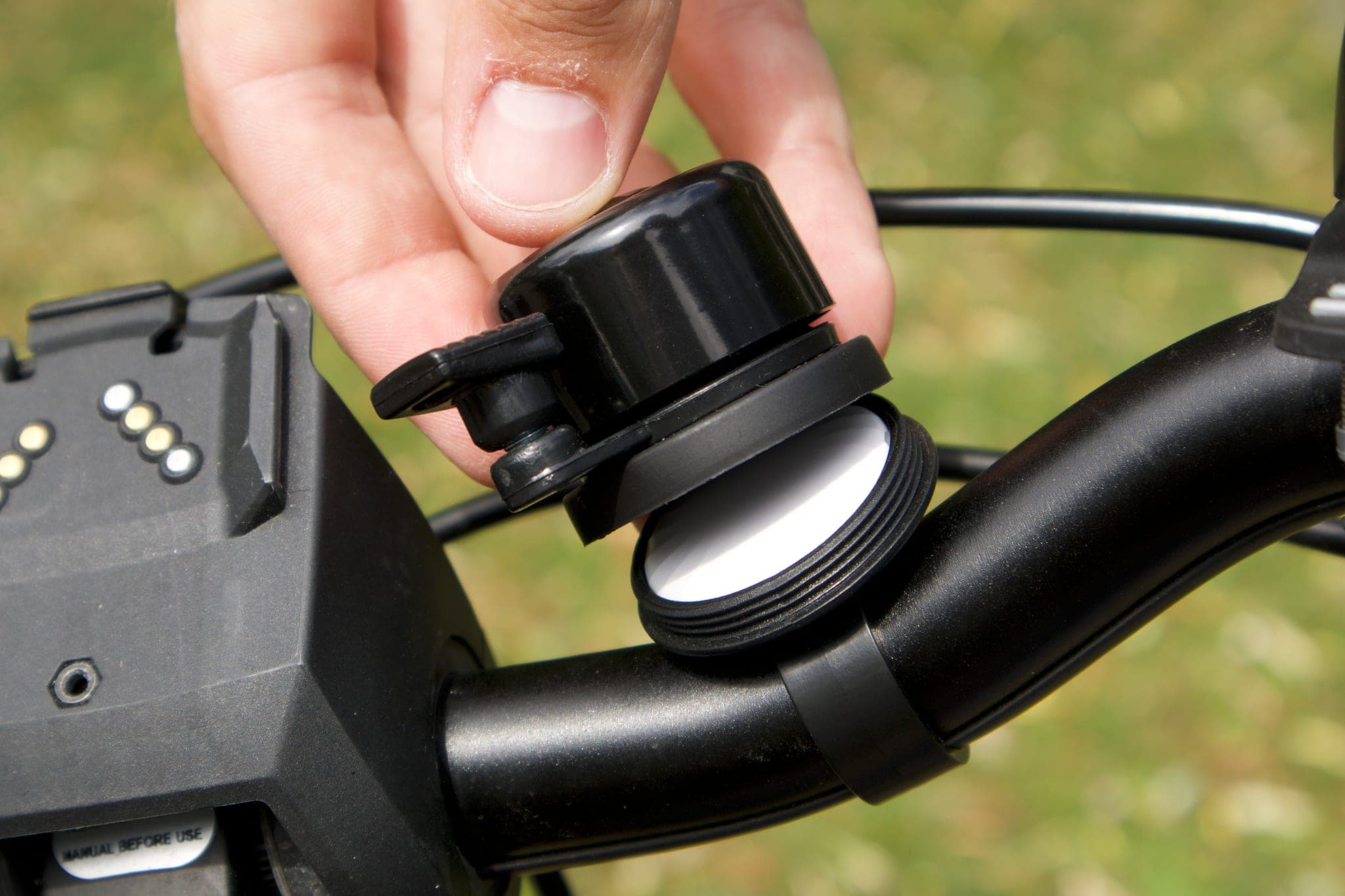
With special holders, such as a bike bell with AirTag compartment or a holder under the bottle cage, you can attach the tracker invisibly. This reduces the chance that a thief will notice and remove the tracker. Many cyclists appreciate the discreet solutions that are available.
Deterrent Effect
Just the knowledge that a bike is equipped with a tracker can deter potential thieves. Although this effect is limited, it can contribute to a sense of security.
3. Disadvantages of an AirTag on Your Bike
No Real-Time Tracking
An AirTag doesn't show live location. If your bike is stolen and moved to a remote area or inside a building, it can take a long time before you get an update. GPS trackers, on the other hand, provide real-time location data, which can be much more effective in case of theft.
Dependent on Passersby with iPhones
The effectiveness of an AirTag depends entirely on the number of Apple devices nearby. In rural areas or during the night, when there are fewer people on the street, tracking can be severely delayed or even fail completely.
No Theft Alarm
When your bike is stolen, you don't receive an automatic notification. You have to actively check the app yourself to see where your bike is located. This is a major disadvantage compared to professional trackers that send notifications when movement is detected.
Anti-Stalking Warning for Thieves
Apple has built in a privacy feature that detects unknown AirTags. If a thief has an iPhone, they'll receive a notification after several hours that an unknown AirTag is traveling with them. Also, the AirTag itself starts beeping after some time. This can lead to the thief quickly discovering and removing the tracker, reducing the chance of recovery.
Limited Functionality Outside the Apple Ecosystem
An AirTag works best within the Apple ecosystem. Android users cannot use the 'Find My' network and have very limited options to track an AirTag. For cyclists with an Android phone, an AirTag is therefore less suitable.
4. Comparison with GPS Trackers
An AirTag is convenient for those looking for an affordable and simple solution, but GPS trackers offer much more control. GPS trackers provide real-time location data, work worldwide without dependence on other devices, and often offer features such as geo-fencing (alarm when the bike leaves a certain area) and movement notifications.
The disadvantage of GPS trackers is the price tag: in addition to the purchase price, you often pay €5-€15 per month in subscription costs, and the battery needs to be recharged regularly. For those willing to invest in more reliability, a GPS tracker is the better choice.
5. Practical Tips for AirTag Use on Your Bike
- Hide the tracker well: Use special holders like a bike bell with AirTag compartment or mount it discreetly under the bottle cage or saddle.
- Activate lost mode: Enable this as soon as you notice your bike is gone. This way you'll immediately get a notification when the AirTag is detected.
- Combine with other security measures: An AirTag is not a replacement for a solid lock. Always use it as additional protection, not as the only defense.
- Register your bike digitally as well: Bike registration with BIKEBAZE offers extra protection by officially linking your bike to your name. This makes ownership verification easier and increases visibility against theft.
6. When Is an AirTag Useful or Not?
An AirTag is useful when:
- You mainly cycle in cities or busy areas
- You're looking for an affordable solution without monthly costs
- You have an iPhone and actively use the Apple ecosystem
- You want to combine the AirTag with other security measures
An AirTag is less useful when:
- You cycle in rural or remote areas
- You use Android
- Real-time tracking and direct theft notifications are important to you
7. BIKEBAZE as an Alternative or Complementary Solution
In addition to trackers like the AirTag, you can also choose a combination with a bike registration platform like BIKEBAZE. BIKEBAZE offers a unique approach by registering bikes in a central database and providing them with a visible, tamper-resistant SafeTag sticker. This sticker actively deters thieves and enables anyone to check whether a bike has been reported stolen.
The major advantage of BIKEBAZE is that it works without dependence on technology like GPS or Bluetooth. It offers a low-barrier and scalable solution for every cyclist, regardless of phone type or budget. Registration is free, and the SafeTag functions as visible proof of ownership and deterrence, increasing the chance of recovery.
For cyclists who value both prevention and traceability, a combination of BIKEBAZE registration and an AirTag can be a strong strategy: the visible SafeTag deters thieves, while the AirTag helps with tracking if the bike is stolen anyway.
Conclusion
An AirTag on your bike is certainly useful if you live in a densely populated area, have an iPhone, and are looking for an inexpensive additional security layer. It's effective for recovering stolen bikes in cities and offers peace of mind without high costs. At the same time, you need to consider the limitations: no real-time tracking, dependence on passersby, and the anti-stalking warning that can tip off thieves.
For those who want maximum certainty, a combination is best: a solid lock, an AirTag for tracking, and possibly registration with BIKEBAZE for visible deterrence and ownership verification. This makes it as difficult as possible for thieves and significantly increases the chance of recovery.
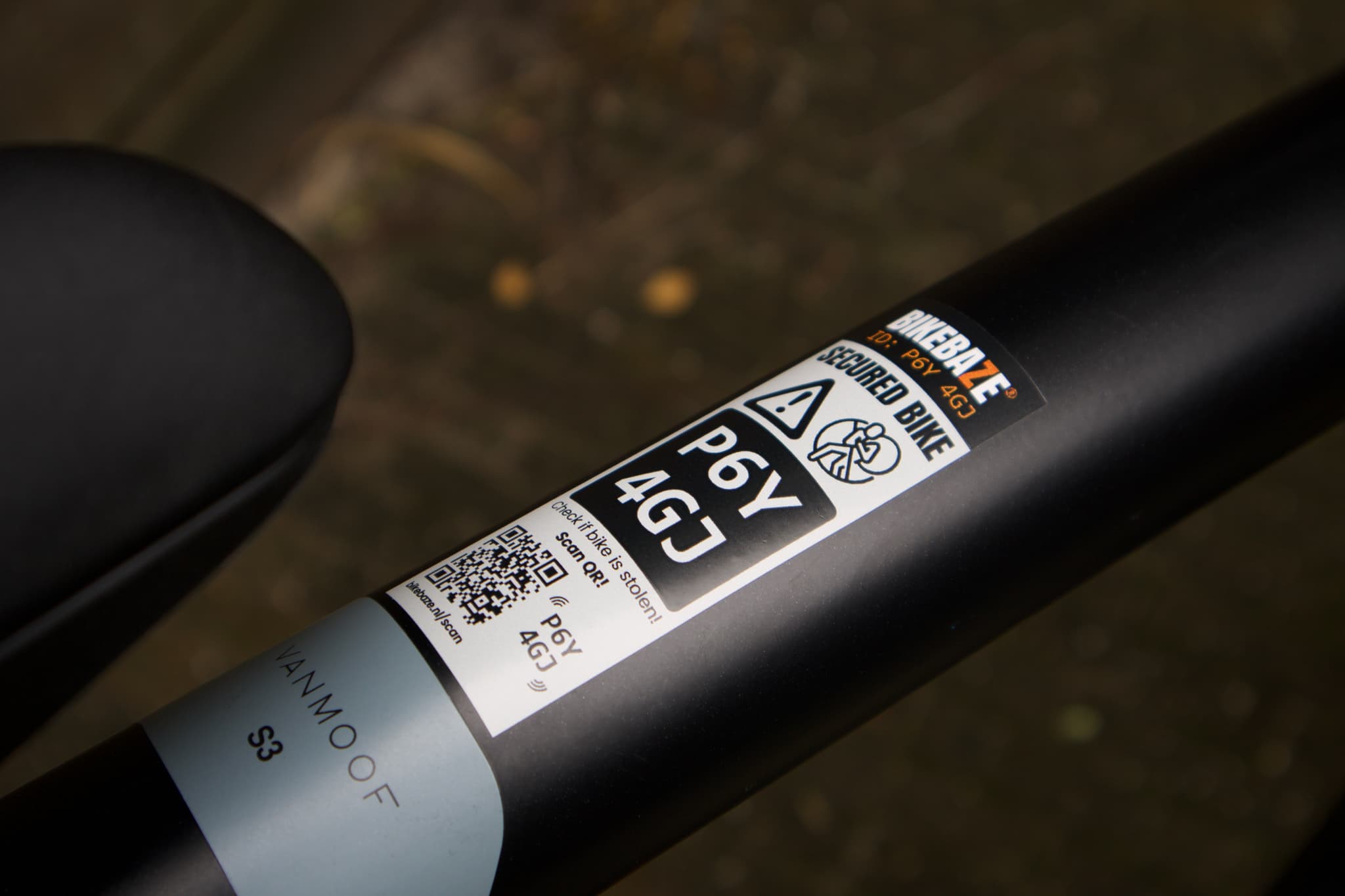
Protect your bike with a SafeTag
The anti-theft sticker that deters thieves and raises the odds of getting your bike back thanks to an active community. Free shipping, ordered before 15:00 ships the same working day.
Tamper-resistant: damage-free removal takes at least 45 minutes
View SafeTagWant to insure your bike too? Get 15% off with Qover
Protect your bike today.
Join thousands of cyclists who register their bike with BIKEBAZE® and help build a safer cycling world.
Register for FREE