Tips
Bike Marking Certificates Explained: Do You Need One?
TL;DR: A bike marking certificate is rarely a legal requirement (France since 2021 is the exception), but insurers and leasing firms may still ask for one. BIKEBAZE delivers free registration plus a visible SafeTag, giving you the traceable proof of ownership they actually want.
··Last updated:
If you search for ways to protect your bike against theft, you will likely come across the term bike marking certificate. Insurance companies, leasing providers, employers, and even municipalities sometimes ask for it. But what does it actually mean, and is it legally required?
The short answer: in most countries, a bike marking certificate is not a legal requirement. Still, it can be very useful in practice. This article explains what a bike marking certificate really is, when it may be requested, and how you can handle this properly.
In France, bicycle marking has been legally required since 2021 for all new bicycles and for second-hand bicycles sold by a professional.
What is a bike marking certificate?
A bike marking certificate is generally a document that proves a bicycle is marked and registered. It usually shows:
- A unique bike identifier, such as a frame number
- The owner or registered user
- The date of registration or marking
- The method used to mark the bike
There is no universal or international standard for such certificates. The term is mostly used as a practical label for proof of identification, not as a formal legal document.
Is a bike marking certificate legally required?
In most countries, bike marking and certification are not mandated by law. You can usually:
- Own a bike without marking it
- Use a bike without a certificate
- Sell a bike without official marking
However, laws and regulations vary by country and sometimes by city. Always check local rules if you are unsure. The absence of a legal obligation does not mean marking is useless. It simply means it is optional rather than compulsory.
What actually matters if your bike is stolen?
A unique bike identifier
Most bikes have a unique frame number. While not always legally required, it is often:
- Requested by police when reporting theft
- Needed to identify recovered bikes
- Required by insurers when processing claims
Without a unique identifier, proving ownership becomes significantly harder.
Proof of ownership
Proof of ownership can include:
- A purchase receipt or invoice
- A digital registration linked to your name
- A confirmation that the bike was registered before theft
The stronger your proof, the better your position with police, insurers, or leasing companies.
Why do insurers and leasing companies ask for a marking certificate?
Insurance providers and leasing companies operate under contractual conditions, not criminal law. They may require:
- Evidence that the bike is identifiable
- Proof that reasonable anti-theft measures were taken
- Documentation linking the bike to a specific person
When they ask for a bike marking certificate, they usually mean any reliable proof that the bike was registered and traceable, not a specific government-issued document.
Common bike marking methods worldwide
Bike marking can take many forms:
- Frame engraving or permanent marking
- Stickers with unique identification codes
- Digital registration linked to visible markings
The goal is always the same:
- Make the bike less attractive to steal
- Make resale more difficult
- Increase the chance of recovery
Visibility is key. A bike that clearly looks registered is often skipped by thieves.
How BIKEBAZE fits into this internationally
BIKEBAZE offers a voluntary, internationally accessible solution focused on prevention and proof.
Free bike registration
You can register your bike for free using its unique identifier. This registration:
- Links the bike to you
- Serves as digital proof of ownership
- Can be shown to insurers or organizations if requested
Visible marking with the SafeTag
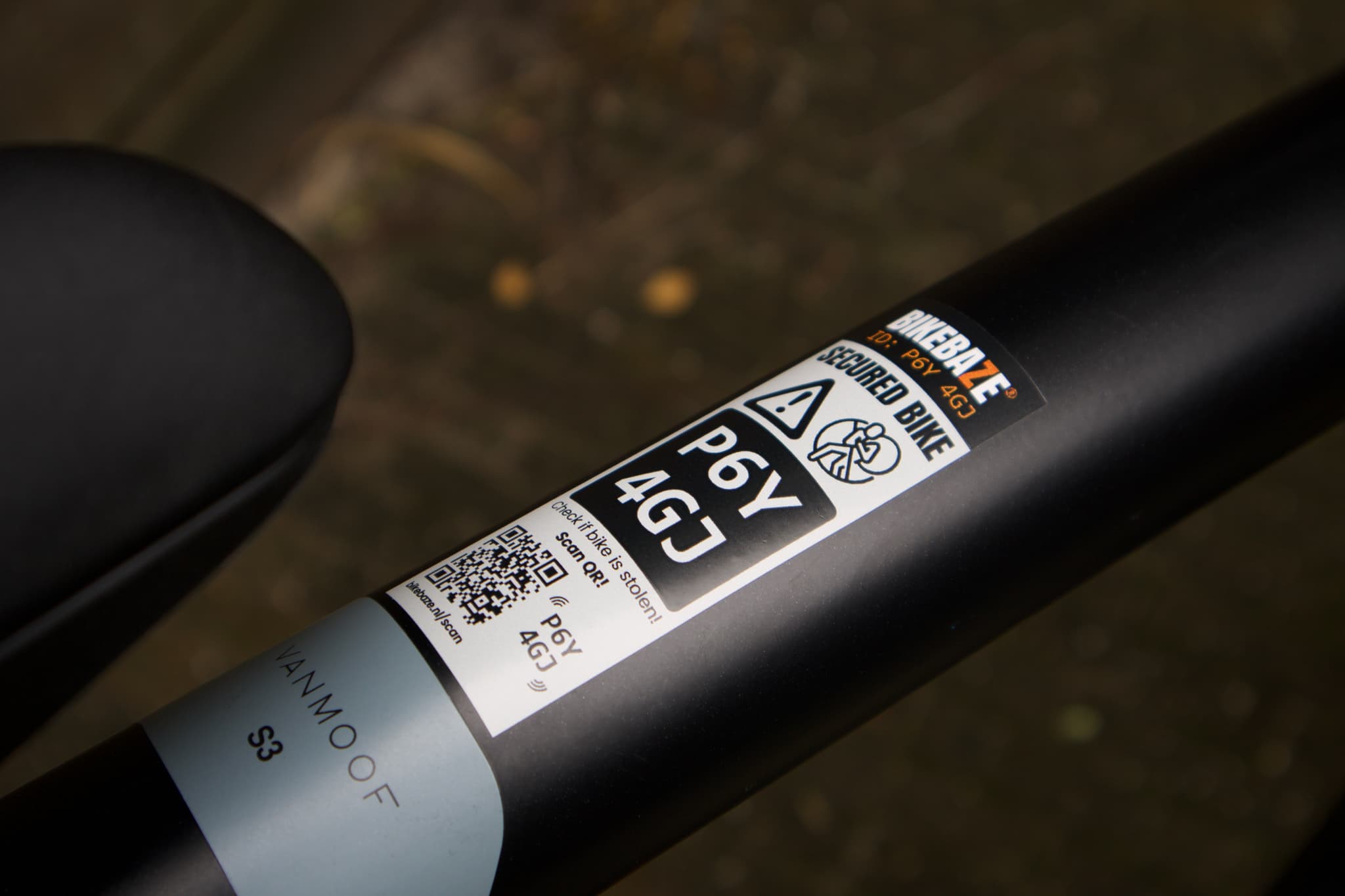
BIKEBAZE uses a highly visible, hard-to-remove SafeTag sticker that:
- Signals the bike is registered
- Acts as a deterrent for theft
- Connects directly to a digital record
Visibility plays a major role in real-world theft prevention.
Activation confirmation as practical proof
After activating a SafeTag, you receive a clear confirmation showing:
- The bike is registered
- The marking is active
- The registration is linked to you
In practice, this confirmation often fulfills what insurers or leasing companies mean when they ask for a bike marking certificate.
Is this an official or government-issued certificate?
No.
What matters in practice is:
- That the bike is identifiable
- That ownership can be demonstrated
- That the bike is traceable if recovered
If an organization accepts this proof, it satisfies their requirements. That acceptance is contractual, not legal.
What should you do if someone asks for a bike marking certificate?
- Ask what proof they actually require
- Check the contract or insurance policy
- Provide registration details and confirmation
- Show visible marking if applicable
In most cases, this resolves the request without issues.
Conclusion
Globally speaking:
- Bike marking certificates are usually not legally required
- Unique identification and proof of ownership are crucial
- Insurers and leasing companies set their own conditions
- Visible marking and registration reduce theft risk
A registered and visibly marked bike is far more effective than an unmarked bike with paperwork that no one can verify.
Want to protect your bike properly?
Register your bike for free and add a visible SafeTag. It helps deter theft, supports recovery, and prepares you if proof is ever requested.
Protect your bike with a SafeTag
The anti-theft sticker that deters thieves and raises the odds of getting your bike back thanks to an active community. Free shipping, ordered before 15:00 ships the same working day.
Tamper-resistant: damage-free removal takes at least 45 minutes
View SafeTagWant to insure your bike too? Get 15% off with Qover
Protect your bike today.
Join thousands of cyclists who register their bike with BIKEBAZE® and help build a safer cycling world.
Register for FREE